When a loved one passes away, adults often have the words and even then, sometimes we stumble. For children, though, grief is a mystery they can’t quite name. They may not understand why Grandpa is no longer in his favourite chair, why the house feels quieter, or why everyone else seems so sad.
As Catholic parents and grandparents, we are blessed with the language of faith to help children see that death is not the end. Yet, explaining heaven, eternity, and the hope of the resurrection to a little one can feel overwhelming. How do we comfort without confusing? How do we tell the truth with gentleness?
That’s why stories are so important. Children connect through imagination and pictures long before they understand catechism or theology. A simple story can bridge the gap between their sadness and the comforting truth that Jesus has prepared a place for us.
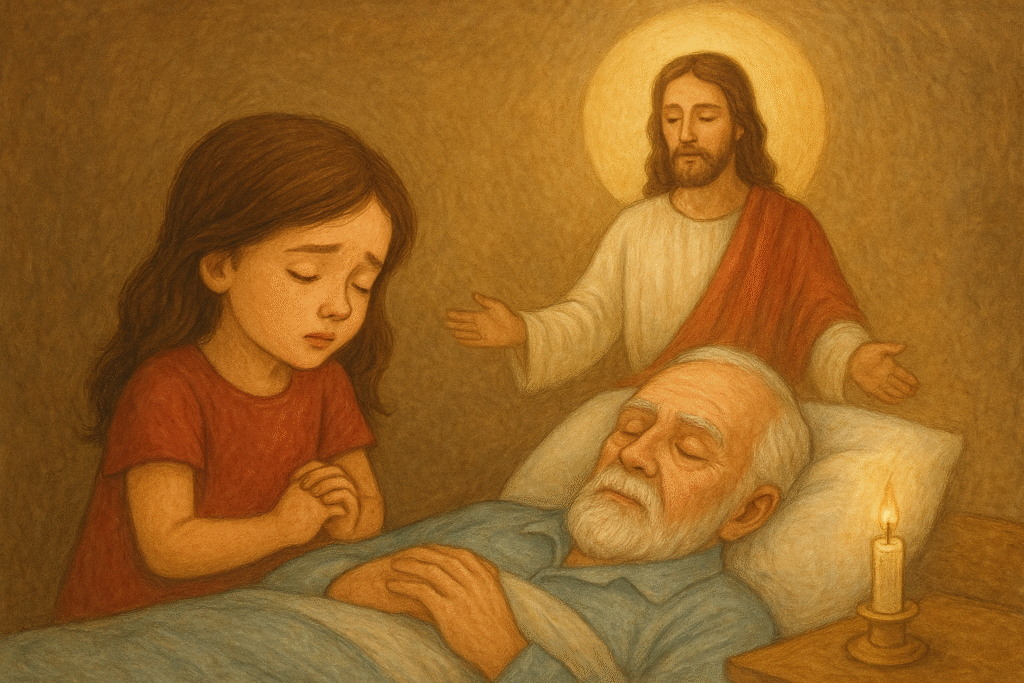
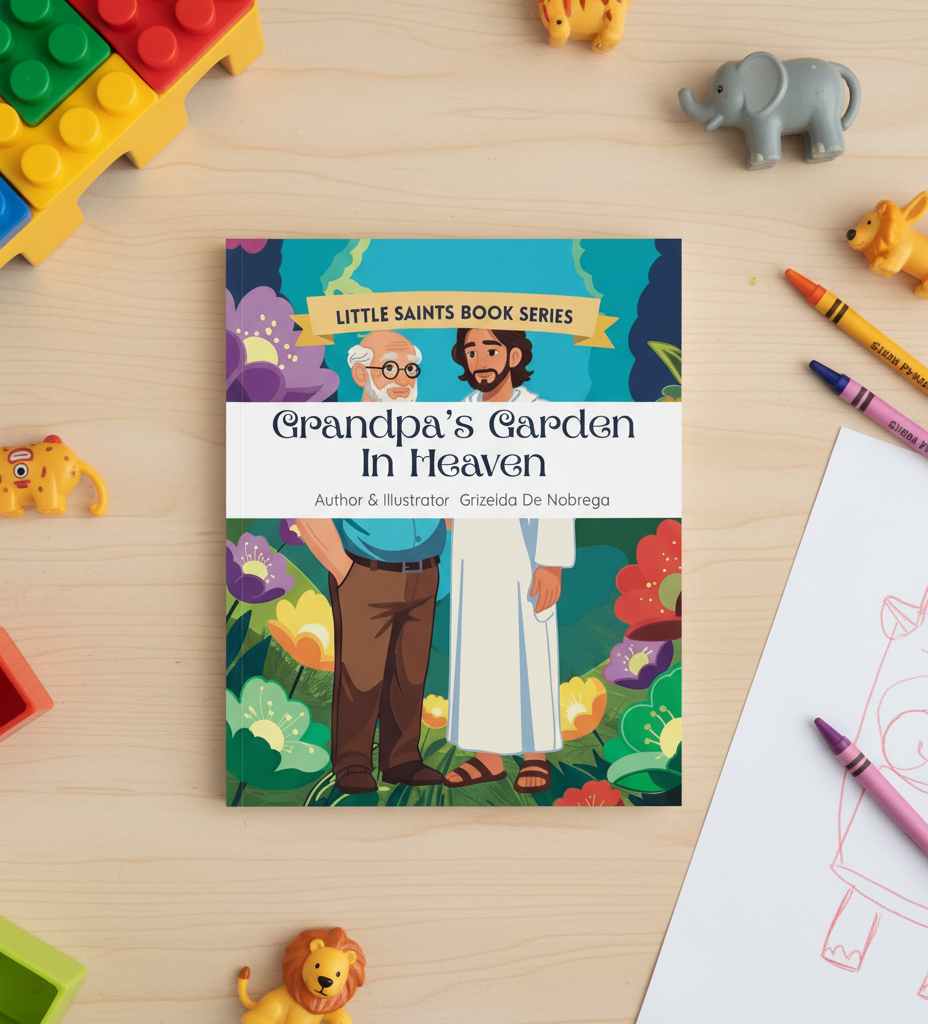
In my newest children’s book, I wanted to create that bridge. The story follows a little girl whose beloved grandfather dies. Her heart feels heavy with sorrow until one night, through the beauty of a dream, she comes to understand that Grandpa is safe with Jesus. The dream does not erase her grief, but it gives her a hope she can carry.
This is not just a book about loss, it is a book about faith, healing, and the promise that love never ends. It invites children to see that heaven is not far away, and that those we love remain with us in the Communion of Saints.
Why Children Struggle With Grief
Adults often forget that children experience grief differently than we do. While we may feel a deep ache for weeks or months, children may move between sadness and play in the span of minutes. This doesn’t mean they are “fine.” It means their hearts are trying to make sense of a loss their minds can’t fully grasp.
A young child may ask repeatedly:
- “When is Grandpa coming back?”
- “Why did Jesus take him?”
- “Can we visit him in heaven?”
These questions can break our hearts, but they are also an opportunity. Children are reaching for understanding, for assurance, for truth. And as Catholics, we are not left empty-handed. We can draw from the wellspring of our faith.
The Catholic View of Death: A Hope-Filled Perspective
For the world, death is often seen as an ending. For us, it is a doorway.
The Catechism teaches us that “death is the end of man’s earthly pilgrimage… but it is also the beginning of eternal life” (CCC 1013). Through Christ’s resurrection, death has lost its sting. Our loved ones who die in God’s grace are not gone forever, they are alive in Him.
This truth can feel lofty, but children can grasp it in simple ways. Just as the sun sets and rises again, or a caterpillar transforms into a butterfly, death is not the end but a change. Heaven is home, and Jesus is waiting there with open arms.
When we explain this to children, we are not minimizing their pain. We are anchoring their grief in hope. We are teaching them that tears are real, but so is eternal life.
Why Stories Speak Louder Than Explanations
Children live in the world of imagination. They learn through pictures, play, and story far more easily than through lectures.
That’s why I wrote this latest book, not just to tell children about heaven, but to let them feel its closeness through story.
In the book, the little girl is heartbroken after her grandfather’s death. She misses his presence, his laughter, the simple comfort of his being there. Nothing anyone says seems to lift the weight from her heart.
But then she dreams. In her dream, she sees Grandpa safe with Jesus, filled with peace and joy. She wakes up with a comfort that words alone couldn’t provide. She realizes that Grandpa is not lost, he is alive in a new way, and she will see him again.
That is the power of story. It doesn’t replace catechism; it prepares the heart for it.
Talking to Your Child About Death: Practical Tips
If you are walking a child through grief, here are some practical ways to combine faith, honesty, and gentleness:
- Be truthful, but gentle.
Avoid vague phrases like “Grandpa went to sleep” this can frighten children. Instead, say: “Grandpa died. His body stopped working, but his soul is alive with Jesus in heaven.” - Encourage questions.
Children may ask the same thing again and again. This isn’t forgetfulness; it’s processing. Answer patiently, even if it feels repetitive. - Use Catholic rituals.
Light a candle for Grandpa, pray a decade of the rosary for him, or visit the cemetery. Rituals give children something concrete to hold onto. - Share your own feelings.
It’s okay to cry in front of your child. Let them know that sadness is natural, but remind them of the greater hope we share in Christ. - Read together.
Books provide gentle entry points for difficult conversations. My book was written to be exactly that kind of companion.
How Dreams and Imagination Help Children Heal
Children often process big emotions through dreams, art, and play. A dream of Grandpa smiling, or a picture they draw of heaven, can be deeply healing.
In fact, the Church has long recognized that God can use dreams and visions to console us. Think of St. Joseph, who was guided in dreams, or countless saints who received comfort through visions.
While we cannot control dreams, we can encourage children to express what they imagine about heaven. Ask them:
- “What do you think Grandpa is doing with Jesus right now?”
- “If Grandpa could send you a message, what would he say?”
These conversations not only comfort children but also root their imagination in faith.
The Communion of Saints: Why Grandpa Isn’t “Gone”
One of the most beautiful Catholic teachings we can share with children is the Communion of Saints. Our loved ones are not cut off from us. They remain part of the great family of God.
When we pray for the dead, and when they pray for us, we are still connected. For a child, this can be deeply reassuring.
You might say: “Grandpa can’t come back to us, but we can talk to Jesus about him, and we can ask Grandpa to pray for us too.” This shifts the focus from absence to relationship.
Why I Wrote This Book
I wrote this story because I know how hard it is to explain death to children in a way that is honest, kind, and rooted in faith. I wanted to create a gentle tool for families, a book that opens conversations, softens grief, and shines the light of Jesus on one of life’s most difficult moments.
It is my prayer that this book helps families draw closer to Christ in their sorrow, and that children who read it will always carry the truth that heaven is real, love never ends, and Jesus is with us in every loss.
A Gentle Companion for Families
If your family has experienced the loss of a grandparent or if you want to prepare your child gently for the reality of death, this story offers comfort wrapped in the light of Catholic faith.
It is not meant to “fix” grief, but to walk alongside it. It opens conversations about heaven, prayer, and trusting Jesus when our hearts ache.
You can find the book here and share it with the little ones in your life. My hope is that it becomes more than a story, that it becomes a companion in sorrow, a doorway to conversation, and a reminder that our faith offers hope that never fades.
Because in the end, we do not grieve like those without hope. We grieve with Christ, who has conquered death, and with the saints, who remind us that love is stronger than the grave.
- Helping Children Understand Loss Through Faith and Story
- 5 Creative Ways to Help Kids Look Forward to Sunday Mass
- How to Make Faith Fun: The Importance of Children’s Catholic Books
- Discover five fun and practical ways to teach children Catholic prayer at home.
- My Catholic Faith Journey: Overcoming Doubt and Finding Peace